
Quick Answer
The top things to do in Zanzibar are Safari Blue, snorkeling at Mnemba Atoll, exploring Stone Town, swimming with red colobus monkeys in Jozani Forest, floating in the Blue Lagoon, a sunset dhow cruise, and a spice farm tour. Most experiences run from June to October and December to March, cost between $10 and $110 per person, and can be booked with hotel pickup through a licensed local operator.
You have finally booked the flight to Zanzibar — and now you are staring at fifty browser tabs trying to figure out what you should actually do once you land. Which beach? Which tour? Which experiences are worth the money and which are tourist traps dressed up with a nice photo? This guide answers every one of those questions in one place, written by a locally owned tour operator that has been running trips across the archipelago since 2014.
Below you will find the exact experiences we send guests on every week, priced in US dollars, ranked by what actually delivers, and grouped so you can build your ideal itinerary in under an hour. Whether you have three days or three weeks, whether you want quiet honeymoon corners or adrenaline on a kite board, the 30+ tours in our catalogue cover it — and this guide will help you pick the right ones.
Who this guide is for: first-time visitors, honeymooners, families, adventure seekers, and repeat travellers who want to go beyond the obvious. If you are booking through a third-party aggregator, this guide will still help you plan — but you will pay 20–40% more than booking direct with a local operator.
What Makes Zanzibar Actually Worth Visiting?
Zanzibar is a semi-autonomous archipelago 25 to 50 kilometres off the coast of Tanzania in the Indian Ocean. The main island — locally called Unguja — is only 85 kilometres long and 30 kilometres wide, which is what makes it possible to see coral atolls, a UNESCO-listed old town, spice plantations, an endangered monkey species, and turquoise sandbanks in the same seven-day trip.
The island’s magnetism comes from three things that are hard to find bundled anywhere else in the world:
World-class ocean
The Mnemba Atoll on the north-east coast is one of East Africa’s best coral snorkeling sites. Visibility often exceeds 20 metres. Whale sharks pass through between October and February.
Living Swahili culture
Stone Town’s UNESCO-listed labyrinth of carved wooden doors, Persian bathhouses, and Omani forts is not a museum. Families still live in the same houses their great-grandparents built.
Spice-island geography
Zanzibar was the world’s largest clove producer for a century. Cinnamon, cardamom, nutmeg, vanilla, and black pepper still grow wild on the same farms — walk through them and taste each one straight from the plant.
The archipelago has been continuously inhabited for more than a thousand years. Arab traders arrived from Oman in the eighth century, followed by Persians, Portuguese, and finally the British, each leaving buildings, words, recipes, and religion behind. The result is an island where the muezzin’s call blends with the boat carpenters’ hammers on Nungwi beach, where you eat biryani for lunch and pilau for dinner, and where the word for “how are you?” — habari? — was borrowed from Arabic centuries before Swahili became East Africa’s most-spoken language.
Local insight
Zanzibar is 99% Muslim, but the tourism zones (Nungwi, Kendwa, Paje, Jambiani, Michamvi) are relaxed. Alcohol is served openly at hotels and beach bars. Modest dress is only required inside Stone Town and away from the beach zones — not on the sand itself. Bikinis are fine at every beach hotel.
How Do You Actually Get to Zanzibar?
There are three practical ways to reach Zanzibar, and the right one depends on where you are flying from and how much time you have. Almost every visitor arrives through one of them.
Direct international flights to Zanzibar (ZNZ)
Zanzibar’s Abeid Amani Karume International Airport (airport code ZNZ) sits 7 kilometres south of Stone Town and now handles direct scheduled flights from Doha (Qatar Airways), Istanbul (Turkish Airlines), Dubai (flydubai), Addis Ababa (Ethiopian Airlines), Nairobi (Kenya Airways), and seasonal charters from Frankfurt, Milan, Zurich, and Warsaw. If you are flying from North America, Australia, or most of Europe, connecting through Doha, Istanbul, or Addis Ababa is usually the fastest routing.
Fly into Dar es Salaam and connect
Julius Nyerere International Airport (DAR) on the Tanzania mainland has more frequent long-haul connections. From DAR you can either take a 20-minute domestic flight to Zanzibar (Precision Air, Coastal Aviation, or Auric Air, roughly $85–120 one-way), or catch a 2-hour ferry from Dar es Salaam port to Stone Town. The Azam Marine fast ferry is comfortable, air-conditioned, and costs around $35 one-way — but book the morning departure if the seas are rough in the afternoon.
Fly in from the safari
If you are combining Zanzibar with a Northern Circuit safari (Serengeti, Ngorongoro, Tarangire), you fly from Kilimanjaro (JRO) or Arusha (ARK) directly to Zanzibar in about 90 minutes. Coastal Aviation and Auric Air run daily flights. This is the routing our safari-plus-beach guests use.
Arrival tip
Ignore the taxi touts inside the ZNZ arrivals hall — the metered fare into Stone Town is roughly $20, but touts routinely quote $50. We include free airport pickup with every multi-day package; standalone airport transfers to any beach zone start at $25 for a private vehicle.
When Is the Best Time to Visit Zanzibar?
The single most important planning decision you will make is when to arrive. Zanzibar has two dry seasons and two wet seasons, and the difference between them determines whether you spend your holiday snorkeling flat turquoise water or watching thunderstorms roll in from the veranda.
The short version: come between June and October for the best all-round conditions, or December to March for the hottest beach weather and the best diving visibility. Avoid April and May unless budget is your only concern.
Peak · Best for tours
June – October
Long dry season. Clear skies, calm seas, low humidity, temperatures 24–29°C. This is when Safari Blue, dolphin trips, and Mnemba snorkeling deliver textbook conditions.
- Whale sharks arrive late Oct
- Kite surfing in Paje: Jun–Sep
- Book 4–6 weeks ahead
Great · Beach & dive
December – March
Short dry season. Hot (28–33°C), humid, still and clear. Best ocean visibility of the year — divers and honeymooners’ favourite window.
- Peak diving Jan–Feb
- Kite season Dec–Feb
- Christmas/NYE fills fast
Shoulder · Quiet
November
Short rains (Vuli). Brief afternoon showers, mostly warm and dry mornings. Rates soften, crowds thin, cultural tours still run every day.
- Best value for money
- Lush spice farms
- Rooms 20–30% cheaper
Low · Budget only
April – May
Long rains (Masika). Heaviest and most reliable rain of the year, especially in April. Ocean gets choppy; some boat tours pause on rough days.
- Cheapest rates all year
- Jozani Forest still perfect
- Many hotels close in April
Zanzibar has four distinct weather windows — the peak season overlaps with East African safari season, making combos easy to plan.
What is the absolute best month to visit Zanzibar?
Late September through early October is our internal team’s favourite window. You still get peak-season weather — dry, calm, and clear — but European school holidays have finished and the Christmas rush has not started, so hotel rates soften and Mnemba is noticeably quieter. If you can only take one week off, aim for the last week of September.
Which months should I avoid?
Skip mid-April to late May unless you are on a strict budget. The long rains bring genuine downpours, some boat tours are cancelled on stormy days, and about 30% of luxury hotels close for renovations. It is not a wash-out — cultural tours, Stone Town, and Jozani Forest all run — but the beach vibe is off.
Local insight
Ramadan shifts by about 11 days each year (running late Feb–late March in 2026, mid Feb–mid March in 2027). Non-tourist restaurants close during daylight, but every beach hotel and tour operator runs normally. If anything, it is a fascinating cultural window — the Eid celebrations at the end are spectacular.
Deeper seasonal breakdowns, including whale-shark timing and kite-wind forecasts, are covered in our Zanzibar travel guides.
What Are the Absolute Must-Do Experiences in Zanzibar?
These are the eleven experiences we send the highest number of guests on and — importantly — the ones with the highest return-visit rate. If your trip is short, prioritise the top four. If you have a full week or more, working through the whole list will give you a rounded picture of the island: reef, forest, town, spice, sandbank, and sunset.
| Experience | Duration | From (USD) | Best for |
|---|---|---|---|
| Safari Blue | Full day (8 hrs) | $60 | Everyone — the classic |
| Mnemba Atoll snorkeling | Half day (5 hrs) | $27 | Ocean lovers, families |
| Stone Town walking tour | 3 hrs | $17 | Culture, history, food |
| Jozani Forest | Half day (4 hrs) | $25 | Families, wildlife fans |
| Blue Lagoon snorkeling | Half day | $25 | Underrated hidden gem |
| Sunset dhow cruise | 2 hrs | $27 | Couples, honeymooners |
| Nakupenda sandbank | Half day | $60 | Photographers, couples |
| Prison Island tortoises | Half day | $40 | Kids, easy half-day |
| Spice farm tour | 3 hrs | $10 | Foodies, best-value tour |
| Cave swimming | Half day | $25 | Instagram, adventurous |
| Dolphin swimming | Half day (early) | $27 | Early risers, ocean lovers |
Every price above is per person and includes hotel pickup from major tourism zones — Nungwi, Kendwa, Paje, Jambiani, Michamvi, Stone Town.
1. Safari Blue — the full-day Zanzibar classic
If you only book one experience, book this one. Safari Blue is a full-day sail on a traditional dhow from Fumba village on the south-west coast into the Menai Bay conservation area. The day includes two snorkeling stops, a stop on Kwale Island’s mangrove-lined swimming lagoon, and a fresh-caught seafood buffet grilled on a sandbank while you are still in your swimsuit.
Boats leave around 9am and return around 4pm. It suits nearly every guest — non-swimmers get life jackets, kids get shallow water, and photographers get the best shots of the day between 3 and 4pm as the dhow sails home in golden light. The $60 rate includes everything: pickup, boat, snorkeling gear, lunch, drinks, and the guide.
2. Snorkel Mnemba Atoll — Zanzibar’s best coral reef
Mnemba is a tiny private island off the north-east coast of Zanzibar surrounded by a horseshoe-shaped coral reef that has been protected since the 1990s. You cannot land on the island itself (it is a private eco-lodge), but the reef around it is open — and it is genuinely world-class. On a good day you will see moray eels, hawksbill turtles, moorish idols, unicornfish, octopus, and if you are lucky, a spotted eagle ray or reef shark.
The Mnemba snorkeling trip departs Matemwe or Kigomani at around 8am — the earlier you go, the better the visibility. Combine it with turtle swimming at Nungwi to get more from the same north-coast morning.
3. Walk Stone Town with a local guide
Stone Town’s old quarter has been a UNESCO World Heritage Site since 2000. It is a labyrinth of coral-stone alleys where you can walk for an hour and not see the same door twice — the 500-plus surviving Zanzibari doors are individually carved, and each one tells you something about the family that once lived behind it. Doors with brass studs signal Indian merchant heritage. Fish and lotus flowers signal Arab origin.
The Stone Town walking tour takes about three hours and covers the Old Fort, the House of Wonders, the former slave market (now the Anglican Cathedral), the Freddie Mercury house, and the Darajani market. At $17 per person it is our best-value cultural experience and pairs beautifully with a Forodhani Gardens street food dinner afterwards.
Local insight
Stone Town’s alleys are unmapped by design — Portuguese pirates used to raid the port, so the town was built as a maze to confuse invaders. A local guide is not optional if you want to actually understand what you are looking at. GPS gives up about ten metres inside the old quarter.
4. Meet the red colobus monkeys in Jozani Forest
Jozani-Chwaka Bay National Park is the last remaining home of the Zanzibar red colobus (Piliocolobus kirkii) — an endangered primate species found nowhere else on earth. There are only around 6,000 left, half of them living inside Jozani. The forest is a 45-minute drive from Stone Town, and the visit takes about three hours: a short guided walk through the mahogany canopy to find the monkey troops, followed by a boardwalk trip through the mangrove swamp on the coast.
The colobus are habituated but wild — they will sometimes come within a metre of you, which makes for extraordinary photos. Kids love this tour, and it pairs perfectly with a Blue Lagoon snorkeling stop on the same day.
5. Swim in the Blue Lagoon — Zanzibar’s best-kept secret
Ten years ago, almost no one knew about the Blue Lagoon. Today it is still one of the quietest snorkeling spots on the south coast — a natural rocky inlet with electric-turquoise water, tropical fish visible at 3 metres of depth, and a small cliff you can jump from if you are feeling brave. The Blue Lagoon tour costs $25 and takes about half a day.
Because it is inland (accessed through a village near Kizimkazi), it is unaffected by ocean swells — meaning you can swim here even on days when Mnemba is choppy. It is our top recommendation for guests staying in Paje or Jambiani who want variety without a long transfer.
6. Take a sunset dhow cruise
A traditional Swahili dhow is a wooden sailing boat with a triangular lateen sail that has been the transport of the Indian Ocean for a thousand years. Watching the sun set over the horizon from one of these boats, glass of prosecco in hand, is possibly the most romantic hour Zanzibar offers. The sunset dhow cruise is two hours, departs from Stone Town harbour around 5pm, and costs $27 per person.
For an even more memorable evening, combine it with dinner at a Forodhani Gardens street food stall (grilled prawns, Zanzibar pizza, sugarcane juice), or upgrade to the Mnemba, turtles & sunset dhow combo for a full-day north-coast experience.
7. Picnic on Nakupenda sandbank
Nakupenda means “I love you” in Swahili — and the sandbank a short boat ride from Stone Town lives up to the name. It is a strip of white sand that appears in the middle of the ocean at low tide, disappears at high tide, and while it is there it is one of the most photographed spots in East Africa.
The tour includes a freshly grilled seafood lunch (lobster, calamari, prawns, snapper) served on the sand, plus snorkeling in the surrounding water. It is usually combined with Stone Town and Prison Island in a single day for guests staying in the Stone Town area.
8. Meet the 200-year-old tortoises on Prison Island
Prison Island — locally called Changuu — sits about 30 minutes offshore from Stone Town harbour. Despite the name, it was never used as a prison; it was built as a slave-holding station in the 1860s and later became a yellow fever quarantine. Today its main draw is a sanctuary of Aldabra giant tortoises, some of whom are more than 150 years old. Kids can (carefully) feed them lettuce leaves and touch their shells.
The Prison Island tour also includes a short beach and snorkeling stop. It is one of the best half-day tours for families and can be combined with the Stone Town walking tour in a single day.
9. Take the $10 Spice Farm tour
The spice farm tour is Zanzibar’s best value — three hours, $10 per person, and one of the most memorable half-days you can have on the island. You walk through a working spice plantation with a local farmer who cuts open cinnamon bark for you to smell, digs up fresh turmeric root, hands you cloves straight off the tree, and explains why lemongrass leaves are used as toothbrushes in the villages.
The tour ends with a fruit-tasting buffet — usually 10 to 15 tropical fruits including jackfruit, custard apple, and star fruit — and often a traditional Swahili lunch. It is one of our few tours that regularly gets tears of laughter at the end. Combine it with Stone Town or Jozani Forest to make a full day.
10. Swim in a limestone cave
Zanzibar’s east coast is limestone karst — meaning it is riddled with freshwater caves, three of which are open for swimming. The cave swimming tour visits Kuza Cave (also a cultural centre), Maalum Cave (the largest and most photogenic), and Salaam Cave (the quietest). Water sits between 22–24°C year-round, is crystal-clear, and is about 3–8 metres deep.
Photographers love this tour for the light shafts that hit the water around midday. Bring an underwater phone case or GoPro — the images are unreal. Pair with Jozani Forest or Blue Lagoon and starfish for a full-day south-coast trip.
11. Swim with wild dolphins at Kizimkazi
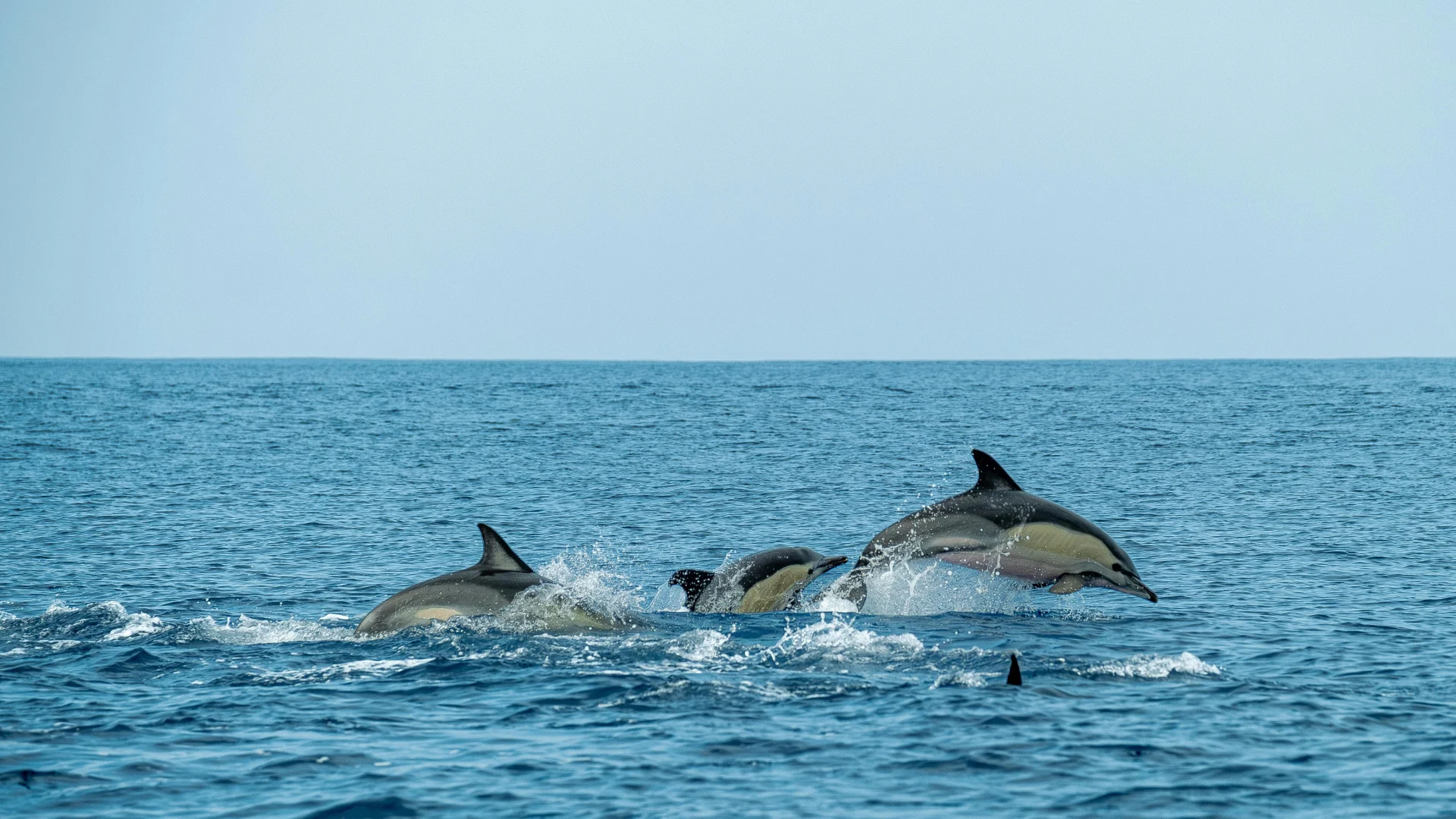
Kizimkazi on Zanzibar’s southern tip is home to resident pods of bottlenose and humpback dolphins that live in the shallow inshore waters year-round. The dolphin swimming tour leaves early (around 6am pickup) because the dolphins are most active before 9am and the water is at its calmest.
These are wild animals — no petting, no dolphin shows — you jump into the water with mask and fins near where the pod is swimming and try to keep up. Some days you get close-up encounters; some days the pod is faster than you and you watch from the boat. Ethical operators (ours included) never chase the pods or drop guests directly on top of them.
Ready to build your itinerary?
Browse all 30+ tours with photos, prices, and full descriptions.
Explore All Tours WhatsApp UsWhat Adventure and Water Sports Can You Do in Zanzibar?
If your interest goes beyond snorkeling and beach lounging, Zanzibar is one of East Africa’s best value adventure-sports destinations. Warm water year-round (26–29°C), reliable seasonal winds, healthy coral, and no crowded queues at the dive shops mean you can pack a lot into a short trip.
Kite surfing at Paje
Paje on the east coast is East Africa’s most famous kite spot — the barrier reef sits 800 metres offshore, meaning you kite over a flat, shallow, waist-deep turquoise lagoon with almost no chop. The kite surfing tour is $80 for beginners and includes lesson, equipment, and beach club access.
Wind seasons: Kaskazi wind blows Dec–Feb (north-east, warm, steady 15–25 knots), Kusi wind blows Jun–Sep (south-east, stronger 20–30 knots). October, November, March, and April are marginal.
Scuba diving Mnemba and Leven Bank
Zanzibar diving is soft-coral and reef-fish focused. The scuba diving package starts at $110 for two tanks including gear and hotel pickup, with sites ranging from beginner-friendly Kichwani reef (5–15m) to advanced Leven Bank pinnacle dives (25–40m) where you can see hammerheads and manta rays in season.
Game fishing (Aug–Mar season)
Sport-fishing charters from Nungwi target yellowfin tuna, dorado, wahoo, sailfish, and marlin. The Pemba Channel just north of Zanzibar is one of the top billfish grounds in the western Indian Ocean. Our game fishing charter starts at $350 and is private (for the whole boat, not per person) — good value for a group of four.
Quad biking through spice villages
The quad biking tour is a two-hour ride through spice plantations, mangroves, and inland villages. No previous experience needed — instructors run a 10-minute briefing on a private track before you go. $110 per person, includes helmet, boots, and drinks.
Horse riding on the beach
Two riding schools operate on the north coast, both offering guided beach rides along Nungwi and Kendwa. The horse riding tour is $65 and works for beginners through advanced riders. Rides at sunset are the most photographed. Combine with turtle swimming and Nungwi/Kendwa beach for a full active day.
Swimming with green turtles at Nungwi
The Nungwi turtle sanctuary at Baraka Aquarium rescues injured green and hawksbill turtles for rehabilitation. Some are released back to the reef; others stay in a natural saltwater lagoon that you can swim in. The turtle swimming experience is $25 and is a favourite with families and children.
Which Zanzibar Beach Should You Base Yourself At?
Zanzibar has one main island (Unguja), one direction that faces the ocean (all of them), and about 15 distinct beach zones. Choosing the right one for your travel style is the biggest single factor in whether you go home rested or exhausted. Here is what we tell our guests.
Nungwi (north)
The busiest and most developed beach on the island. Wide sand, no tide, sunset over the water, boat trips to Mnemba, restaurants and bars until midnight. Best for first-timers, solo travellers, and groups who want energy and options.
Downsides: Not romantic. Beach hawkers common. Feels like a Mediterranean resort at times.
Kendwa (north-west)
Nungwi’s calmer neighbour, four kilometres south. Also no tide, also sunset facing, but a fraction of the crowds. Kendwa Rocks Full Moon Party is the island’s biggest monthly event. Best for couples who want swimmability without pure isolation.
Paje (east)
The kite-surfing capital of East Africa. Barefoot beach clubs, low-key vibe, big tide swings (barrier reef is 800m offshore). Comes alive at sunset and after dinner. Best for adventure sports, remote workers, and travellers under 40.
Downsides: Cannot swim at low tide from the beach — you walk out on the sand to the reef edge.
Jambiani (south-east)
Ten kilometres south of Paje. Same barrier reef geography (big tides), same white sand, but with a more traditional village feel and cheaper accommodation. Fisherman’s boats still leave at dawn. Best for slow travel and repeat visitors.
Michamvi & Pongwe (east peninsula)
The most exclusive stretch. Boutique lodges and honeymoon resorts along a quiet peninsula. Michamvi Kae faces west, meaning you get both sunrise on the east side and sunset on the west from the same peninsula. Best for honeymoons and special occasions.
Matemwe (north-east)
The gateway to Mnemba Atoll — five minutes from the launch. Long, quiet stretch of sand with mostly mid-range boutique resorts. Best for snorkeling and diving-focused trips.
Stone Town (west coast)
Not a beach zone, but worth basing here for 1–2 nights at the start or end of your trip. All cultural and historical tours start here; Prison Island and Nakupenda are 30 minutes away. Book at least one dinner at Forodhani Gardens night market.
Whichever beach you pick, our airport transfer service covers every zone with a fixed per-vehicle rate — no meter meters, no surprises.
How Many Days Do You Need in Zanzibar? Sample Itineraries
The honest answer: seven days is the sweet spot. Five days feels rushed; ten days risks getting repetitive unless you add a mainland safari or dedicate time to diving. Below are four itinerary templates covering the most common trip lengths, all built around our multi-day packages.
3-Day Zanzibar Itinerary — the “long weekend”
Day 1
Arrival & Stone Town
Airport transfer to Stone Town, check into a heritage hotel, afternoon walking tour of Stone Town’s old quarter, Forodhani Gardens dinner.
Day 2
Safari Blue
Full-day Safari Blue from Fumba village — snorkeling, dhow sailing, sandbank lunch. Transfer to Nungwi in the evening.
Day 3
Beach & departure
Morning beach at Nungwi/Kendwa or sunrise dolphin trip. Afternoon transfer to Zanzibar airport (ZNZ).
Book directly as the Zanzibar 3 Days 2 Nights package from $295 per person.
5-Day Zanzibar Itinerary — the “full week off”
Day 1
Arrival & Stone Town walking tour
Airport pickup, Stone Town walking tour, sunset dhow cruise, dinner at Forodhani Gardens.
Day 2
Prison Island & Nakupenda
Half-day Prison Island tortoises + Nakupenda sandbank picnic lunch. Transfer to Paje or Jambiani in the afternoon.
Day 3
Jozani Forest & Blue Lagoon
Morning Jozani Forest with red colobus, afternoon Blue Lagoon snorkeling.
Day 4
Mnemba & sunset
Transfer to north coast. Mnemba Atoll snorkeling in the morning, turtle swimming at Nungwi in the afternoon, sunset drinks.
Day 5
Beach & departure
Morning at leisure. Afternoon transfer to ZNZ.
Available as the Zanzibar 5 Days 4 Nights package from $660 per person.
7-Day Zanzibar Itinerary — the sweet spot
Add a Spice Farm tour, a kite surfing lesson at Paje, a Cave Swimming half-day, and a full beach day between the 5-day plan and departure. This is our most popular structure — see the 7 Days 6 Nights package from $1,160.
10+ Days — add a mainland safari
If you have ten days or more, the highest-impact addition is a Tanzania mainland safari. From Zanzibar you can fly to Selous, Mikumi, or the Northern Circuit (Serengeti, Ngorongoro, Tarangire, Manyara). See the next section for details.
| Package | Nights | From (USD pp) | Best for |
|---|---|---|---|
| 3 Days 2 Nights | 2 | $295 | Short weekend, first-timers |
| 4 Days 3 Nights | 3 | $475 | Highlights only |
| 5 Days 4 Nights | 4 | $660 | Solid balance |
| 6 Days 5 Nights | 5 | $725 | Beach + culture |
| 7 Days 6 Nights | 6 | $1,160 | Our top recommendation |
| 8 Days 7 Nights | 7 | $985 | Slow travel, honeymoons |
All multi-day packages include hotel accommodation, breakfast, all tours listed, hotel transfers, and expert local guides.
Can You Combine Zanzibar with a Tanzania Safari?
Yes — and it is one of the best add-ons any Zanzibar traveller can make. Mainland Tanzania holds the Serengeti, Ngorongoro Crater, Tarangire, Selous, and Mikumi — every one of them reachable by short flight or drive from Zanzibar. If you have already flown across the world to reach Zanzibar, extending three to four days to see the Big Five is a decision very few guests regret.
Short safari from Zanzibar — 1 to 2 days
The closest parks by flight are Selous Game Reserve (Nyerere National Park) and Mikumi National Park. Both are reachable via a 45–60 minute charter flight from Zanzibar and support day trips.
- Mikumi day trip — from $455 per person, fly in and out same day, lion and elephant sightings likely.
- Selous day trip — from $475, boat safari plus game drive combo, unique among East African parks.
- 2-day Mikumi — from $925, includes one night in a bush camp.
- 2-day Selous — from $900, includes river safari and cultural stop.
Northern Circuit safari — 3 to 4 days
The classic Tanzania safari — Serengeti, Ngorongoro Crater, Tarangire, Lake Manyara. Fly from Zanzibar to Arusha (about 90 minutes), safari for 3–4 days, fly back. Ngorongoro Crater alone justifies the extension — it is one of the seven natural wonders of Africa and holds the highest density of predators anywhere on the continent.
- 3-Day Serengeti safari — from $2,295.
- 3-Day Serengeti + Ngorongoro — from $2,495.
- 2-Day Tarangire + Ngorongoro — from $1,495.
- 3-Day Tarangire + Ngorongoro + Manyara — from $1,695.
- 4-Day Serengeti + Ngorongoro — from $3,195 (our top-selling northern circuit combo).
Local insight
Add the safari before your beach time, not after. Safari mornings start at 5:30am and involve long drives on rough tracks — your body will thank you if you sleep it off at a Nungwi beach hotel instead of catching a Zanzibar → Europe overnight flight.
Full details, dates, and Big Five expectations are on the safari from Zanzibar page.
What Should You Eat in Zanzibar?
Zanzibari cuisine is one of the most under-appreciated food cultures in the Indian Ocean. A thousand years of trade left behind Persian rice dishes, Indian curries, Arab kebabs, Portuguese chilli, and African coconut and cassava techniques — all folded together into one small cuisine. If you eat well here, you will eat like nowhere else.
The essential Zanzibari dishes to try
- Zanzibar pizza — a savoury or sweet stuffed flatbread cooked on a griddle at Forodhani night market. Fillings from Nutella-banana to beef-and-egg. $2–4.
- Urojo (Zanzibar mix) — a spicy, tangy tamarind-based soup with potato bhajias, cassava crisps, and boiled egg. Sold from street carts. $1.50.
- Pilau & biryani — Zanzibar’s rice traditions. Pilau is one-pot spiced rice; biryani is layered and served on special occasions.
- Octopus curry — coconut-milk-based, slow-cooked, uniquely Swahili. Best at family-run guesthouses.
- Mishkaki — grilled beef or chicken skewers, marinated in ginger and chilli. Every evening market has them.
- Chapati & mandazi — the everyday breakfast breads.
Where to eat — top spots
- Forodhani Gardens night market (Stone Town) — every night from 6pm. Grilled seafood, Zanzibar pizza, sugarcane juice. Non-negotiable.
- The Rock Restaurant (Michamvi) — Zanzibar’s most Instagrammed restaurant, built on a rock in the ocean. Reservation essential. See our Spice Farm, Jozani & The Rock combo tour.
- Emerson on Hurumzi rooftop — sunset dining above Stone Town rooftops with live taarab music.
- Beach hotel dining — every mid-range and luxury beach hotel serves fresh-caught fish daily.
Vegetarian and dietary needs
Zanzibar is surprisingly vegetarian-friendly — coconut rice, lentil curries, chapati, and vegetable pilau are all common. Vegan options are harder outside luxury hotels; halal is the default across the whole island; gluten-free is manageable but always double-check with the chef.
What Is There to Do in Zanzibar at Night?
Zanzibar is not Ibiza. Nightlife here is intimate rather than manic — sunset drinks with your feet in the sand, live taarab music on a Stone Town rooftop, a beach barbecue with your dive buddies, or a full moon party once a month. If you are looking for four-in-the-morning club culture, you will not find it. If you are looking for evenings you will remember, you will.
Forodhani Gardens night market — Stone Town
Every evening from about 6pm, the seafront gardens transform into a smoke-filled open-air food court where dozens of vendors grill skewers of prawns, lobster tail, tuna, and beef mishkaki over charcoal. Zanzibar pizza — a stuffed flatbread cooked on a griddle — is invented here. Order a sugarcane juice pressed on the spot with lime and ginger, wander the stalls, and eat while the muezzin’s evening call floats across the harbour. Expect to spend $8–15 for a full meal.
Sunset spots that are actually worth the walk
- Africa House rooftop (Stone Town) — the classic sundowner spot. Reserve for a table on the ocean-facing terrace by 5:30pm.
- Emerson on Hurumzi (Stone Town) — rooftop dining with live taarab music (traditional Swahili song). A proper cultural evening.
- The Rock Restaurant (Michamvi) — sunset dinner on a rock in the ocean. Booking essential 2–4 weeks ahead in peak season.
- Cholo’s beach bar (Nungwi) — driftwood, hammocks, cold beer, no shoes. Zanzibar’s most Instagrammed beach bar.
- Mr Kahawa (Paje) — coffee by day, cocktails by night, kite surfers coming off the water at golden hour.
Kendwa Rocks Full Moon Party
The one genuine “party party” on the island. Held once a month around the full moon at Kendwa Rocks resort on the north-west coast. DJs, dancing, bonfire on the beach, guest list until dawn. $10–20 entry depending on line-up. Book a room nearby if you plan to stay past midnight — taxis home to the east coast at 2am are unpleasant and overpriced.
Sunset dhow with drinks and dinner
Our most popular evening tour is the Stone Town sunset dhow cruise — a traditional wooden sailing boat, two hours on the water, drinks included, Stone Town’s crumbling waterfront lit up in the fading light. It costs $27 and it is the closest thing to time travel Zanzibar has.
How Do You Avoid Tourist Traps in Zanzibar?
Zanzibar’s tourism industry grew fast, and with it came a layer of chancers who prey on first-timers. The good news is that most of the classic traps are easy to spot once you know what to look for. Here is what our team wishes every guest knew before landing.
Don’t book beach tours from touts on the sand
Every busy beach — Nungwi especially — has men offering “cheap” boat trips, dolphin tours, and snorkeling. Their boats often lack life jackets, safety flares, and any real insurance; the “guide” is frequently someone hired that morning. If the boat capsizes or the engine fails 3km offshore, there is no company to call. Always book with a licensed operator whose office you can physically visit — ours is on Mkunazini Street in Stone Town.
Ignore the $10 spice tour ambush
You will see cards handed to you in Stone Town alleys offering “very cheap” spice tours. Some are legitimate; many end with an aggressive push to buy $80 of jarred spices from a “family shop” at the exit. Book the official spice farm tour — same price, no ambush, real farmer, more spices.
Watch the “airport ticket surcharge”
Taxi drivers occasionally invent a “night surcharge,” “luggage fee,” or “roadwork detour” at ZNZ airport. The fair fare into Stone Town is around $20. Agree on the exact price and currency before you get in — better still, pre-book a fixed-rate transfer.
Careful with the “you missed pickup — pay extra” scam
If a stranger approaches at your hotel claiming your tour operator sent them because “the original driver was delayed,” verify by calling us directly (or the WhatsApp number in your booking). We will never subcontract to a driver you have not been notified about in writing.
Diving and snorkeling equipment quality
Cheap operators sometimes use cracked masks, snapped fin straps, and buoyancy jackets missing the inflate button. If you are diving especially, check gear at the shop before you get on the boat. All Blue Green equipment is PADI-standard and inspected weekly.
The universal rule: if a tour is more than 30% below market rate, someone is cutting corners — usually on safety, insurance, or fair pay for the guide. Zanzibar’s honest operators all price within a similar range because we all pay similar boat fuel, park fees, and staff wages.
Practical Planning — Everything Else You Need to Know
Do I need a visa for Zanzibar?
Most international visitors need a visa. Tourist visas cost $50 (USD, single entry) for most nationalities, $100 for US passport holders (multiple entry, 12 months). You can get a visa on arrival at Zanzibar International Airport (ZNZ), at Julius Nyerere International Airport (Dar es Salaam), or apply in advance through the official Tanzania immigration eVisa system at eservices.immigration.go.tz. Applying in advance is faster on arrival but takes about 10 working days to process. East African Community citizens do not require a visa.
Do I need vaccinations to visit Zanzibar?
A Yellow Fever certificate is required if you are arriving from a country where yellow fever is present (this includes most of sub-Saharan Africa and parts of South America) — but not if flying from Europe, USA, Canada, Australia, or Asia. Routine vaccinations (MMR, hepatitis A, typhoid, tetanus) should be up to date. Malaria prophylaxis is recommended: consult your GP 4–6 weeks before travel. Zanzibar is generally low-risk for malaria in the tourism zones but the mainland is higher-risk.
What currency should I bring to Zanzibar?
US dollars are widely accepted at all tour operators, hotels, and larger restaurants (bring 2019 series or newer only — older bills are often refused). Local currency (Tanzanian Shilling, TZS) is useful for small purchases, market street food, and taxi fares. Cards are accepted at hotels but with 3–5% surcharges. ATMs work in Stone Town, Nungwi, and Paje but occasionally run out of cash. We accept USD, EUR, GBP, and TZS.
Is Zanzibar safe for tourists?
Zanzibar is one of East Africa’s safest tourist destinations. Violent crime against visitors is extremely rare. Standard precautions apply: keep your phone and wallet secure in Stone Town alleys, avoid walking the beach alone at night, respect local dress codes (modest clothing in Stone Town and villages — bikinis are fine on beach resorts). Women travel solo here regularly and safely. Emergency medical care is available at Mnazi Mmoja Hospital in Stone Town; more serious cases evacuate to Nairobi.
What should I pack for Zanzibar?
- Reef-safe sunscreen (SPF 30–50)
- Insect repellent with DEET
- Light cotton or linen clothing
- Modest cover-up for Stone Town
- Swimwear (2 sets)
- Sunglasses and wide-brim hat
- Water shoes for reef walking
- Waterproof phone case or GoPro
- Small daypack for tours
- Refillable water bottle
- Universal plug adapter (Type G, UK 3-pin)
- Copy of yellow fever certificate
How do I get around Zanzibar?
The island is 85km long — everywhere reachable within 90 minutes by road. Public transport (dala-dalas) exists but is slow and rarely used by visitors. Tourist taxis are plentiful but often overpriced; agree on the fare before you get in. The cheapest and most reliable option is a private transfer with your tour operator: our Zanzibar airport transfers cover every zone with fixed rates and no surprises.
What language do people speak in Zanzibar?
Kiswahili is the mother tongue; English is widely spoken in tourism zones. Learning three or four Swahili phrases will win you real warmth: Jambo (hello), Asante (thank you), Karibu (welcome), Hakuna matata (no problem — yes, it is really said here).
Cultural etiquette — what to know
- Dress modestly (covered shoulders and knees) in Stone Town, villages, and around mosques. Beach zones are relaxed.
- Do not photograph people without asking. Never photograph officials or military installations.
- During Ramadan, eat and drink discreetly in public during daylight — hotels and tour operators run normally.
- Use your right hand for eating, handshakes, and giving money. The left hand is considered unclean.
- Tipping is appreciated but not obligatory. Guides: $5–10 per day per person. Waiters: 10%.
How Do You Book Zanzibar Tours?
Booking directly with a licensed local operator is almost always the best value option. Aggregator platforms typically add 20–40% commission, and their listings often route you through sub-contractors you never meet before the tour. Booking direct means one point of contact from confirmation to hotel drop-off.
With Blue Green Zanzibar Tours, you can book through any of the following:
- Website — browse and inquire on the individual tour pages.
- WhatsApp — +255 774 077 465. Fastest for last-minute or custom bookings; we usually respond within minutes.
- Email — info@bluegreenzanzibartours.com. Best for multi-day or bespoke itineraries.
- Phone — +255 774 077 465. Available every day 7am–10pm Zanzibar time.
What is included in every tour?
- Hotel pickup and drop-off from all major tourism zones
- Expert local guide (English, and often French/Italian/German on request)
- All park and site entry fees
- Snorkeling equipment where applicable
- Meals as specified on each tour page
What is the cancellation policy?
Free cancellation up to 24 hours before departure. Weather cancellations by us receive full refunds or free rescheduling. Deposit required for multi-day packages and safaris; balance due on arrival.
Not sure where to start?
Tell us your dates, group size, and interests. We reply within one working day with a custom itinerary — no obligation.
Request Custom Itinerary WhatsApp NowFrequently Asked Questions About Things to Do in Zanzibar
What is the number-one thing to do in Zanzibar?
The single most-booked and highest-rated experience is Safari Blue — a full-day traditional dhow trip from Fumba village that includes snorkeling, sandbank lunch, and open-sea sailing. It suits families, couples, and solo travellers, costs from $60 per person, and covers three completely different environments in one day.
How many days do you need in Zanzibar?
Seven days is the sweet spot. It gives you time for Stone Town, two north-coast beach days, one south-coast day, Safari Blue, Mnemba snorkeling, Jozani Forest, and a sunset dhow cruise without rushing. Five days is enough for a highlights-only trip; ten days is ideal if you want to add a Tanzania mainland safari. Our most popular option is the 7 Days 6 Nights package.
Is Zanzibar expensive to visit?
Zanzibar is affordable by international standards. Day tours start at $10 (spice farm) and rarely exceed $110 (scuba diving, quad biking) per person. Mid-range beach hotels cost $80–150 per night; luxury lodges $250–500. A comfortable seven-day trip including flights, tours, hotels, and food typically ranges from $1,500 to $3,000 per person depending on style. Book direct with local operators to avoid the 20–40% aggregator markup.
Which is better — Nungwi or Kendwa?
Both are on the same north coast and both have sunset over the water and swimmable beaches at all tides. Nungwi is bigger, busier, and better for water sports, restaurants, and nightlife. Kendwa is quieter, more relaxed, and famous for its monthly Full Moon Party at Kendwa Rocks. Choose Nungwi for energy; choose Kendwa for calm. For maximum quiet, look further at Matemwe or Michamvi.
Can I see the Big Five from Zanzibar?
Not on Zanzibar itself — the island has no lions, elephants, or big cats. But you can fly to mainland Tanzania parks from Zanzibar in under two hours. Mikumi, Selous, Serengeti, Tarangire, and Ngorongoro Crater all support 1–4 day safaris starting and ending at Zanzibar airport. The 4-Day Serengeti and Ngorongoro combo is our most popular safari extension.
What is the best beach in Zanzibar for swimming?
Nungwi and Kendwa on the north coast are the only beaches in Zanzibar without significant tides — meaning you can swim from the beach at any hour. On the east coast (Paje, Jambiani, Michamvi), the barrier reef sits about 800 metres offshore, and at low tide the ocean recedes almost that entire distance. Both types of beach have their charm — the east coast is spectacularly photogenic at low tide.
Do Zanzibar tours include hotel pickup?
Yes — all Blue Green Zanzibar Tours include hotel pickup and drop-off from every major tourism zone: Stone Town, Nungwi, Kendwa, Matemwe, Kiwengwa, Pongwe, Michamvi, Paje, Jambiani, and Kizimkazi. Pickup times depend on the tour and your accommodation location; we confirm the exact time on booking. There are no extra transfer fees.
What is the best time to visit Zanzibar for snorkeling?
The best snorkeling conditions in Zanzibar are June to October (long dry season — calm seas, excellent visibility) and January to March (short dry season — very warm water, sometimes glass-flat conditions). Avoid April and May when the long rains create choppy seas. Whale sharks appear at Mafia Island (a day trip south of Zanzibar) between October and February. Book early morning departures for the best visibility.
Is it safe to travel to Zanzibar as a solo female?
Yes. Zanzibar is one of East Africa’s safest destinations for solo female travellers. Standard precautions apply — modest dress in Stone Town and villages (bikinis are fine at beach resorts), don’t walk alone on beaches after dark, book tours with licensed operators. Local culture is Muslim but visitor-friendly; hassle is minimal compared to many other tropical destinations. Our shared group tours are ideal for solo travellers wanting to meet others.
Can I use US dollars in Zanzibar?
Yes — US dollars are the second currency of Zanzibar tourism. All tour operators, hotels, and major restaurants accept USD (2019 series or newer only — older bills are frequently refused). Local currency (Tanzanian Shilling) is useful for small purchases like street food, market shopping, and short taxi rides. We accept USD, EUR, GBP, and TZS cash, plus card payments through PesaPal.
What should I not do in Zanzibar?
Do not wear beachwear in Stone Town or in villages (modest cover-up expected). Do not photograph people, mosques interior, or military installations without permission. Do not touch or feed dolphins on swimming tours (ethical operators forbid this). Do not drink tap water — bottled or filtered only. Do not book beach tours through informal touts on the sand; use a licensed operator with insurance and proper equipment.
Is Zanzibar good for honeymoons?
Zanzibar is one of the top three honeymoon destinations in East Africa, alongside the Seychelles and Mauritius. Combine a Michamvi or Matemwe boutique lodge for four nights with a Stone Town heritage hotel for two nights and a Serengeti safari extension for three nights and you have a complete honeymoon. Signature honeymoon experiences include the sunset dhow cruise, a private Nakupenda sandbank picnic, and dinner at The Rock. We build bespoke honeymoon itineraries on request.
Can I visit Zanzibar with young children?
Yes — Zanzibar is genuinely family-friendly. The safest beaches for young swimmers are Nungwi and Kendwa (no tides). The best tours for kids are Jozani Forest (red colobus monkeys, guaranteed sightings), Prison Island giant tortoises, and Nungwi turtle swimming. Avoid deep-water snorkeling for children under 8. Malaria risk is low in tourism zones but do consult your paediatrician about prophylaxis 4–6 weeks before travel.
Is Zanzibar or Mauritius better?
Different holidays. Zanzibar offers stronger culture (UNESCO Stone Town, spice farms, Swahili history), better value (about half the price of comparable Mauritius resorts), and easier safari extensions to mainland Tanzania. Mauritius offers more predictable weather, more polished luxury resorts, and world-class golf. If your priority is culture, adventure, and combining with wildlife, Zanzibar wins. If your priority is guaranteed weather and resort polish only, Mauritius has the edge. For most first-timers to the Indian Ocean, Zanzibar delivers more variety per dollar.
What travel insurance do I need for Zanzibar?
Standard international travel insurance covering medical evacuation is strongly recommended. Serious medical cases in Zanzibar are typically evacuated to Nairobi (Kenya) or Johannesburg (South Africa), which costs $15,000–40,000 without cover. Confirm your policy covers water sports if you plan to dive or kite surf — many standard policies exclude these. World Nomads, SafetyWing, and Allianz are three insurers commonly used by our guests.
Final Thoughts — Planning Your Zanzibar Trip
Zanzibar rewards travellers who plan a little and then let the island do the rest. The best trips we book combine two or three days of active exploration — Stone Town, Safari Blue, Mnemba, Jozani — with two or three days of pure beach recovery. If you have longer, add a mainland safari; if you have shorter, prioritise the classic four (Safari Blue, Stone Town, Mnemba, and one sunset dhow cruise).
“The most common feedback we hear at the airport drop-off is not ‘we saw everything’ — it is ‘we can’t wait to come back.’ Zanzibar is not a destination you finish in one trip.”
A few closing takeaways worth remembering as you finalise your plan:
- Timing matters more than budget. The right week in September will make a bigger difference than an extra $200 per night.
- Book direct with a local operator to save 20–40% and get a real person to call if plans change.
- Mix zones — spend half your trip on the north coast (Nungwi/Kendwa) and half on the east or south for real variety.
- Leave a full day free for the beach with no scheduled tour. You will need it more than you think.
We have been running Zanzibar tours since 2014, all as a locally owned Stone Town–based operator. Whether you want a bespoke honeymoon, a family adventure, a solo trip, or a group safari-plus-beach combination, we would love to help you plan it. Reach us on WhatsApp (+255 774 077 465), email, or through our contact page — we usually reply within a few hours, and there is no obligation to book.
Karibu Zanzibar. See you on the island.